Grazing Calories: The Bites That Wreck Your Diet
Grazing calories are the untracked bites that quietly kill your deficit. Here is how to spot them and log the truth.

Most people track breakfast, lunch and dinner with reasonable honesty, then quietly ignore the extra calories that slip in around the edges. A handful of nuts at your desk. The last three chips off your kid’s plate. The “quick taste” while cooking that turns into half a portion. These are grazing calories, and for many people they’re a common reason a diet that looks perfect on paper stalls in real life.
The frustrating part is that grazing doesn’t feel like eating. There’s no plate, no sitting down, no moment where you decide “this is a meal.” That’s exactly why it dodges your attention - and your food log.
Why grazing calories are so easy to miss
Your brain tends to remember meals as events. It does not reliably remember the biscuit you ate standing at the kitchen counter at 4pm. Studies on dietary recall consistently find that people underestimate their intake, and unstructured snacking appears to be a meaningful part of that gap.
A few reasons it can add up faster than you’d think:
- Calorie-dense foods dominate grazing. Few people graze on cucumber. It’s crisps, cheese, nuts, chocolate, leftover pasta - foods that can pack several hundred calories into a portion that disappears in under a minute.
- Weaker satiety signals. Eating slowly and mindfully tends to support fullness cues. Grabbing food on the move barely registers, so you may still feel hungry at dinner despite the extra calories.
- It happens during autopilot moments. Cooking, tidying, scrolling, working. Your hands are busy and your guard is down.
A single tablespoon of peanut butter straight from the jar is roughly 90-100 calories. Do that a few times across a day “just to check it’s still good” and you’ve eaten a fair chunk of a meal you’ll never remember.
The maths that catches people out
Say your daily target is a 500-calorie deficit for steady fat loss. Here’s how a “perfect” tracked day can quietly fall apart (these figures are rough illustrations, not exact):
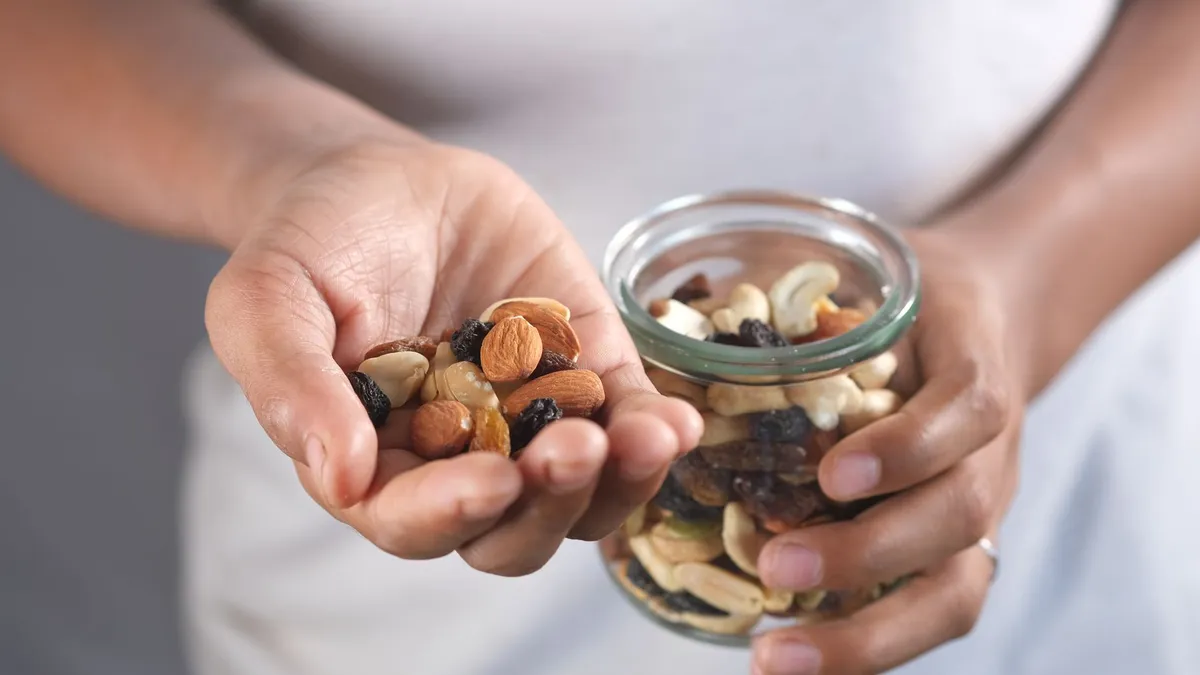
- 2 handfuls of mixed nuts while making dinner: ~180 cal
- 4 leftover chips off a plate: ~90 cal
- A “sliver” of cheese from the fridge: ~70 cal
- 2 squares of chocolate after lunch: ~110 cal
- A splash of full-fat milk in 3 coffees: ~90 cal
That’s roughly 500 or more calories. Potentially your entire deficit, erased, in bites you never sat down for. On paper you did everything right. On the scale, nothing moves, and it’s tempting to conclude your metabolism is broken. Usually it isn’t. The log is just incomplete. (Keep in mind that daily weight also swings with water, salt and digestion, so one flat day means little on its own.)
How to actually catch them
You don’t need to become obsessive. You need to make the invisible visible. Three habits do most of the work.
1. Log it before you eat it, not after
The moment you decide to eat something outside a meal, log it first. This does two things: it captures the calories before you forget, and it inserts a short pause that can defuse a lot of impulse grazing. Often just opening the app is enough to make you think “actually, I’m not hungry, I’m bored.”
This is where photo-based tracking can earn its place. Snapping the handful of nuts takes less effort than typing, so you may be more likely to actually do it in the messy 6pm kitchen rush.
2. Give grazing a home
Instead of banning snacks, plan for them. Build one or two proper snacks into your day - say 150 to 250 calories each - and let them absorb the grazing urge. A planned Greek yoghurt with berries at 3pm can head off the unplanned raid on the biscuit tin at 4pm. Structure tends to beat willpower.
3. Close the kitchen
Pick a time in the evening when eating stops. Many people do a lot of their unplanned grazing between dinner and bed, picking at leftovers and treats out of habit rather than hunger. A simple “kitchen’s closed after 8pm” rule removes the decision entirely, if that suits your schedule.
The one-plate test
Here’s a quick gut check for any given day. Imagine gathering everything you ate outside your three main meals and putting it on a single plate. Would it look like a meal? A snack? Or a slightly alarming second dinner?
Many people are surprised the first time they do this honestly. That mental plate can easily add up to a few hundred calories - the kind of range that separates losing weight from wondering why you aren’t.
A few foods worth watching because they graze so easily (values are approximate):
- Nuts and nut butters (delicious, but roughly 550 to 650 cal per 100g)
- Cheese (very roughly 350 to 400 cal per 100g, depending on type)
- Cooking oil “eyeballed” into the pan (around 120 cal per tablespoon)
- Cereal or granola eaten dry by the handful
- Anything you finish on behalf of someone else

Track the truth, not the intention
None of this means grazing is evil or that you need military discipline. Some days you’ll pick at food and that’s fine. The goal is simply to know. When your log reflects what actually went in your mouth, everything downstream gets easier - your deficit is more realistic, your plateaus have clearer explanations, and your adjustments have a better chance of working.
Start with a few days of honest logging, grazing included. Photograph the handfuls. Log before, not after. You may find the issue isn’t your metabolism at all, but simply an incomplete count, and that one’s fixable.
This article is for general information and isn’t medical advice. If you have a health condition or a history of disordered eating, speak to your GP or a registered dietitian before changing how you eat or track.
Sources
- Understanding calories - NHS
- Calories and weight loss - NHS
Track calories the calm way.
AI photo scanning, clean calorie and macro rings, and gentle habits that actually last.