
Late-Night Eating: Does It Really Cause Weight Gain?
Late-night eating and weight gain: what the evidence actually says, plus practical tips to manage evening hunger without wrecking your goals.
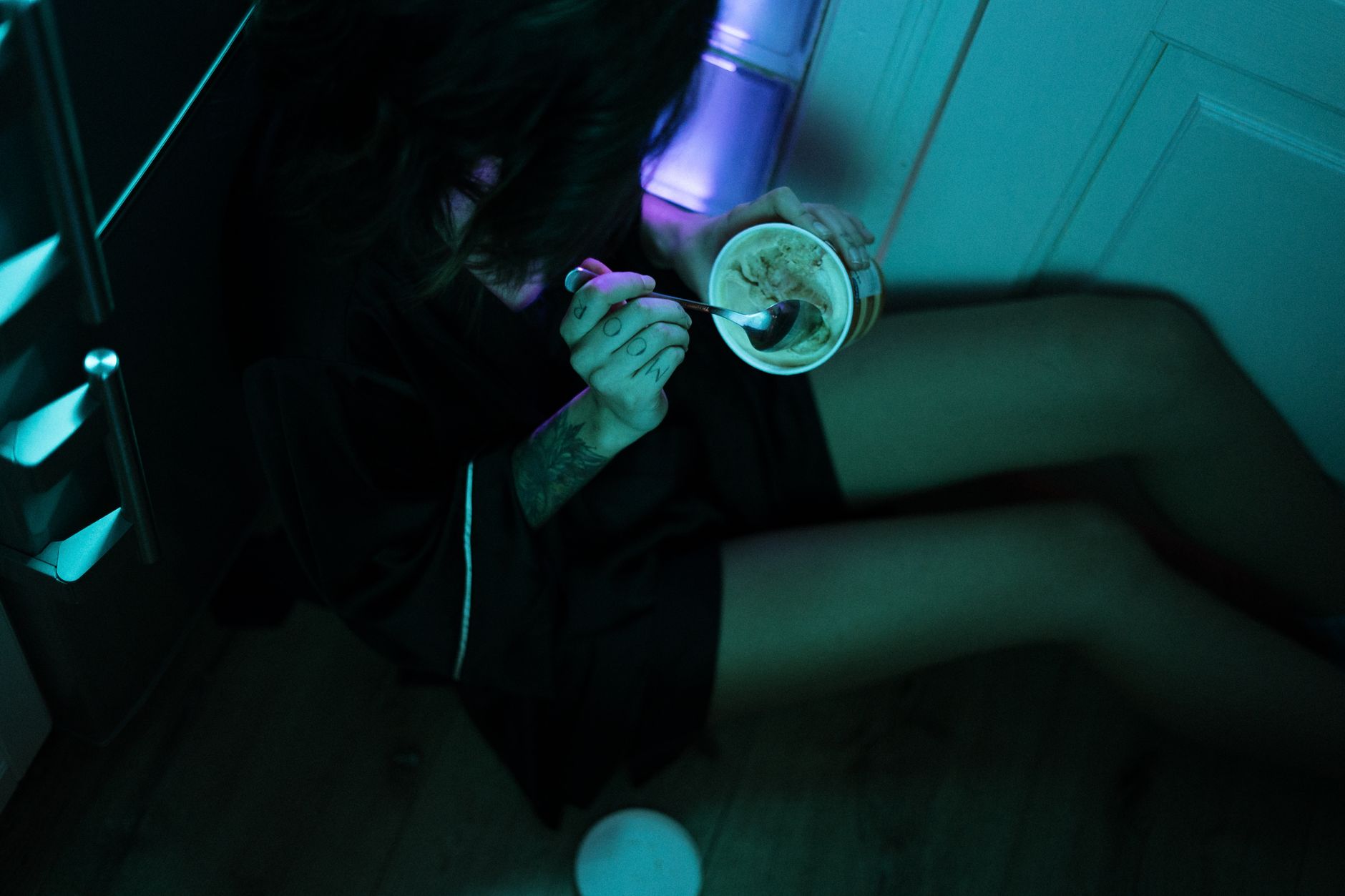
You’ve probably heard it a hundred times: don’t eat after 8pm, or the calories go straight to your waistline. It’s one of those diet rules that gets repeated so often it feels like settled fact. But is it?
The short version: your body doesn’t have a clock that flips a switch at a certain hour and starts storing everything as fat. What actually matters is how much you eat across the whole day, and late-night eating just happens to be where a lot of extra, unplanned calories sneak in. Let’s pull the two apart, because the difference changes how you’d fix it.
What the evidence actually says
Weight change comes down to energy balance over time — the calories you take in versus the calories you burn. A biscuit at 11pm has roughly the same energy as a biscuit at 11am. Your metabolism doesn’t shut down while you sleep; your body is still running your heart, brain, breathing and repair systems all night.
That said, timing isn’t completely irrelevant. Some research into circadian rhythms suggests eating very late may nudge things like blood sugar handling and appetite hormones in a less helpful direction for some people. The findings are still mixed and often based on small or short studies, so it’s worth holding them loosely rather than treating them as a firm rule.
Here’s the more practical pattern that research keeps pointing back to:
- People who eat late often eat more total calories, not just the same calories later.
- Evening snacking tends to be mindless — in front of a screen, out of the packet, poorly remembered the next day.
- Late eating frequently follows an under-eaten day, so it’s driven by genuine hunger and restriction.
The problem usually isn’t the hour on the clock. It’s that a bowl of crisps at midnight rarely gets counted, planned or noticed — and it’s often not because you were actually hungry.

Why the evening is where calories hide
Think about your own worst snacking moments. They’re rarely at breakfast. For many people, evenings are when willpower is lowest, the day’s structure disappears, and food becomes entertainment rather than fuel.
A few things tend to stack up after dark:
- Decision fatigue. You’ve made countless small choices all day. By 9pm the part of your brain that says “one square of chocolate” may be running low.
- Undereating earlier. Skip a proper breakfast, grab a sad lunch, and your body tends to come collecting in the evening — usually with interest.
- The screen effect. Eating while watching TV or scrolling means you barely register what went in. The packet’s empty and you’re not sure how.
- Emotional wind-down. Food is an easy, reliable way to decompress after a stressful day. Nothing wrong with that occasionally, but it can add up.
None of these are about the time itself. They’re about environment and habit.
How to handle evening eating without banning it
You don’t need a hard cut-off time. It usually helps more to remove the reasons the late calories pile up in the first place.
Eat enough during the day
This is the big one. If you front-load more of your food — a real breakfast with protein, a lunch that actually fills you — you’re likely to arrive at the evening far less ravenous. A day with plenty of protein and fibre tends to blunt those 10pm cravings on its own.
Plan a proper evening snack
Trying to eat nothing after dinner often backfires into eating everything. Instead, budget for something you enjoy: Greek yoghurt with berries, a couple of squares of dark chocolate, popcorn, a small bowl of cereal. When it’s planned, it’s not a binge — it’s just dinner’s smaller sibling.
Make it visible
If you track your food, log the evening snack before you eat it. Seeing that a “quick handful” of nuts can run to a couple hundred calories often changes the portion without much willpower required. This is where a photo-based tracker can earn its keep — you snap the plate, get a rough estimate, and there’s less guesswork.
Change the cue, not just the food
Mindless snacking is usually attached to a trigger: sitting on the sofa, opening Netflix, finishing work. Swap the routine rather than fighting the food. A cup of herbal tea, brushing your teeth early, or moving to a different room can quietly weaken the habit.

So, should you stop eating late?
If a small evening snack fits your day and helps you sleep or stay sane, there’s no strong reason to cut it. There’s no magic in an arbitrary cut-off, and rigid rules tend to crack the moment life gets busy.
But if your evenings are where lots of untracked, half-remembered calories disappear, that’s genuinely worth addressing — not by watching the clock, but by eating better earlier and being honest about what goes in after dark.
The scale doesn’t much care whether you ate at 2pm or 10pm. It cares about the total. Sort the total, and the timing tends to sort itself.
This is general information, not medical advice. If you have a condition affecting blood sugar, appetite or sleep, check with a GP or dietitian before changing your eating pattern.
Sources
- Time-restricted eating and weight — Harvard Health — Harvard Health Publishing
- How to lose weight — NHS
Track calories the calm way.
AI photo scanning, clean calorie and macro rings, and gentle habits that actually last.