How to Eat Out Without Wrecking Your Calorie Goals
Learn how to eat out and still hit your calorie goals with simple menu strategies, smart swaps, and realistic tracking tips for restaurants.

You’ve been tracking all week. Your macros are tidy, the scale’s moving, and then Friday arrives with a dinner invite. Suddenly you’re staring at a menu with no calorie counts, a bread basket already on the table, and a friend ordering a second bottle of wine.
Eating out doesn’t have to blow up your progress. Most of the damage tends to come from a handful of predictable things: hidden cooking oils, oversized portions, and drinks that quietly add up before the mains arrive. Once you know where those calories hide, you can enjoy the meal and still wake up on track.
Why restaurant meals hit so hard
Restaurant food is often designed to taste as good as possible, which usually means more fat, salt, and sugar than you’d cook with at home. A plate that looks reasonable can carry considerably more oil than you’d use in your own kitchen, because butter and oil are cheap ways to make food taste rich.
Portion sizes are the other culprit. A “single” restaurant pasta serving is often enough for two, and a steak can be much larger than a typical home serving. You’re not eating badly on purpose - the plate is just bigger than your body needs.
A useful rule of thumb: assume any restaurant dish contains more calories than you’d guess. Cooking oil, dressings, and glazes are almost always underestimated.
Plan before you arrive
One of the most effective things you can do happens before you sit down. Most chains and plenty of independents publish menus online, and many list calories now that large food businesses in England are required to show them.
- Look at the menu in advance. Pick your main while you’re calm and not hungry, so the bread basket doesn’t decide for you.
- Save room, don’t starve. Skipping meals all day to “bank” calories often backfires - you arrive ravenous and overshoot. Eat normally, just a touch lighter if it suits you.
- Decide your drink plan. Alcohol adds up quickly - a couple of large glasses of wine can run to several hundred calories. Choosing sparkling water first and one drink with the meal can save a meaningful chunk.
Smart swaps at the table
You don’t need a special-occasion diet. A few quiet choices do most of the work.
Order structure that fills you up
Lead with protein and vegetables. Grilled chicken, fish, or a lean steak with a side of greens tends to be filling and is easier to estimate. If you want the chips, consider sharing a portion rather than getting your own.
Manage the extras
- Ask for dressings and sauces on the side so you control how much goes on.
- Choose grilled, baked, or steamed over fried, creamy, or “crispy” - those words often signal extra oil.
- Box up half a large main before you start if you know the portions are generous.
Handle the bread and starters
There’s nothing wrong with bread. The trouble is eating it on autopilot before the meal even starts. Have a piece if you fancy it, then move the basket out of arm’s reach.
Tracking when there’s no label
This is where a lot of people give up, and it’s exactly where a bit of estimating pays off. You won’t be perfect, and you don’t need to be.
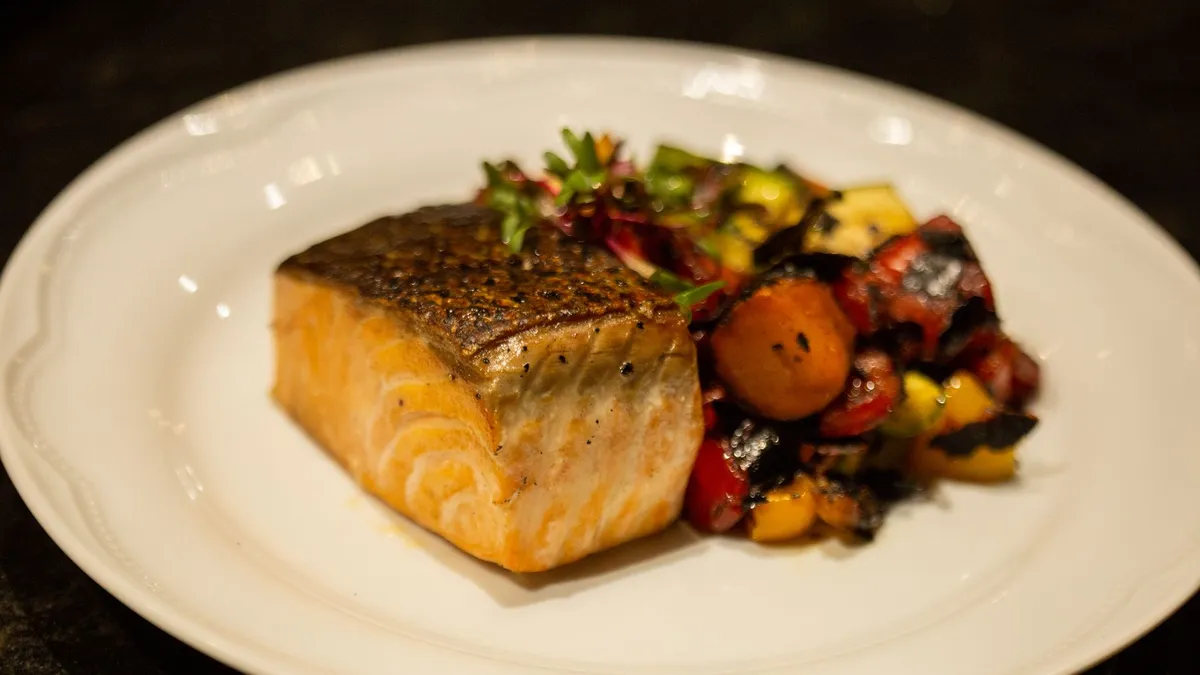
- Build the plate in your head. Name the protein, the carb, and the fat source. A salmon fillet, a fist of rice, and a drizzle of oil is a rough template you can log.
- Use your hand as a guide. A palm of protein, a cupped hand of carbs, a thumb of fats. It’s crude, but it’s consistent.
- Round up, not down. When in doubt, log the bigger estimate. Overestimating slightly protects your deficit better than hopeful guessing.
- Snap a photo. If your tracker scans meal photos, use it to get a fast starting estimate, then adjust for the oil you can’t see. Bear in mind photo-based estimates are approximate at best.
Even a rough log beats no log. The goal is a realistic number, not a lab-grade one.
The one-meal-in-context mindset
A single restaurant meal rarely undoes a week of consistent eating. What derails people is often the story they tell afterwards: “I’ve ruined it, so I may as well write off the weekend.” That mindset can cost far more calories than the meal did.
Think in weekly averages instead of daily perfection. If your target is 2,000 a day, that’s 14,000 across the week. A dinner that lands at 1,200 calories simply means slightly lighter days on either side. The maths still works.
- Enjoy the meal you planned for.
- Log it honestly, even if the number stings.
- Go back to your normal routine at the very next meal.
Eating out is part of a normal life, and a tracker is there to make room for those meals, not to ban them. People who keep weight off long term generally aren’t avoiding restaurants - they’ve just learned to fold them in without guilt.
This article is for general information and isn’t medical advice. If you have a health condition or specific dietary needs, check with a GP or registered dietitian.
Sources
- Healthy Eating Plate - Harvard T.H. Chan School of Public Health
- Understanding calories - NHS
Track calories the calm way.
AI photo scanning, clean calorie and macro rings, and gentle habits that actually last.