
Portion Sizes: How to Eyeball Them Without a Scale
Learn how to estimate portion sizes with your hand and everyday objects, so you can track calories accurately even without a food scale.
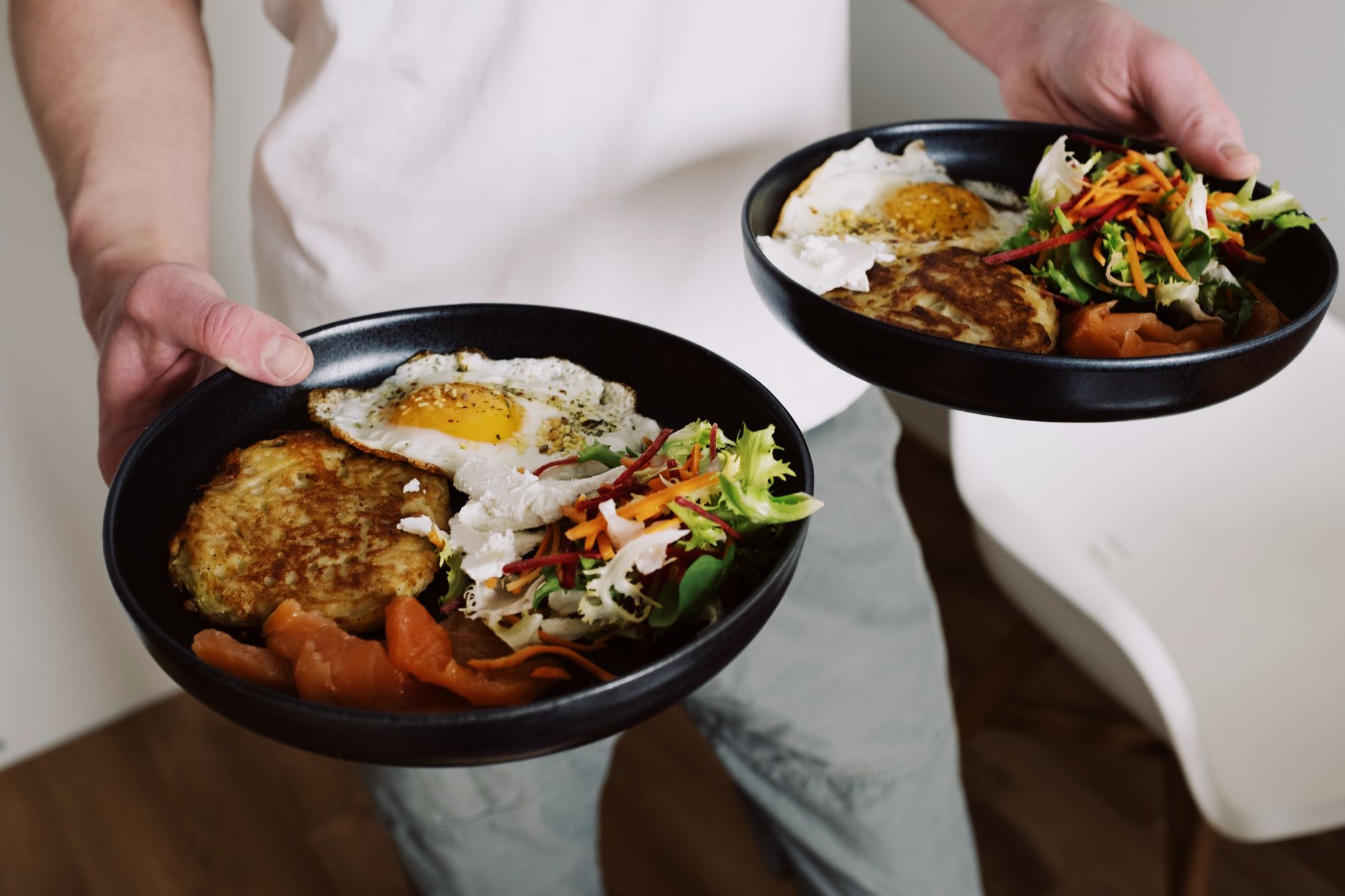
Most people who start tracking their food quit within a few weeks. Not because they lack willpower, but because weighing every meal on a kitchen scale feels like a second job. You forget the scale at a restaurant. You can’t exactly whip it out at your mate’s barbecue. And after a long day, measuring out 40g of oats feels like one chore too many.
Here’s the good news: you don’t need a scale for most meals. Your own hand is a portable, surprisingly reliable measuring tool that’s always with you. Once you learn a few reference points, you can estimate portions in seconds and get close enough to make your tracking genuinely useful.
Why “close enough” actually works
People assume calorie tracking only counts if it’s precise to the gram. It doesn’t. Research on self-monitoring generally finds that tracking regularly and consistently matters more than perfect accuracy. Someone who eyeballs their meals every day will often do better over time than someone who weighs everything for a week and then gives up.
There’s a catch worth knowing about. Studies on portion estimation suggest that many of us underestimate how much we eat, and the effect tends to be larger with bigger servings and calorie-dense foods like oils, nuts and cheese. So the goal isn’t to be casual. It’s to be consistent, and to be a little more careful with the foods that pack the most calories per bite.
A reasonable target: get roughly in the right ballpark most of the time. That’s enough to keep you honest and moving in the right direction, without the burnout.
The hand portion guide
Your hand scales roughly with your body, which makes it a handy built-in reference. These are estimates commonly used as a starting point — treat them as approximate, since hand sizes and individual needs vary:
- Protein (chicken, fish, tofu, mince): a palm-sized portion, about the thickness of a deck of cards. Roughly 100–150g cooked for many people.
- Carbs (rice, pasta, potato, oats): a cupped handful is a rough guide to a single serving of cooked grains, or one small jacket potato.
- Fats (nut butter, oils, cheese, nuts): your thumb, tip to base, is roughly a tablespoon. This is the one people most often underestimate.
- Vegetables: a full fist, and go back for seconds as often as you like.
Stack those together and a typical plate becomes one palm of protein, one to two cupped handfuls of carbs, a thumb or two of fat, and a fist or more of veg. Simple to remember, and it travels everywhere you do.
Everyday objects that help
If hand cues don’t click for you, kitchen and household objects work just as well:
- A deck of cards ≈ a palm of meat (roughly 85–100g).
- A tennis ball ≈ one cupped handful of rice or pasta.
- A golf ball ≈ roughly two tablespoons, handy for nut butter or hummus.
- A poker chip or stack of a couple of coins ≈ about one tablespoon of oil.
- A light bulb ≈ a portion of leafy greens once they’ve wilted down.
- Your closed fist ≈ about one cup, useful for cereal, soup or berries.
The NHS uses similar visual cues in its healthy eating guidance precisely because they’re easy to picture in the moment, whether you’re plating up at home or facing a buffet.
Where eyeballing goes wrong (and how to fix it)
A few foods will quietly wreck your estimates if you let them.
Liquid calories and oils
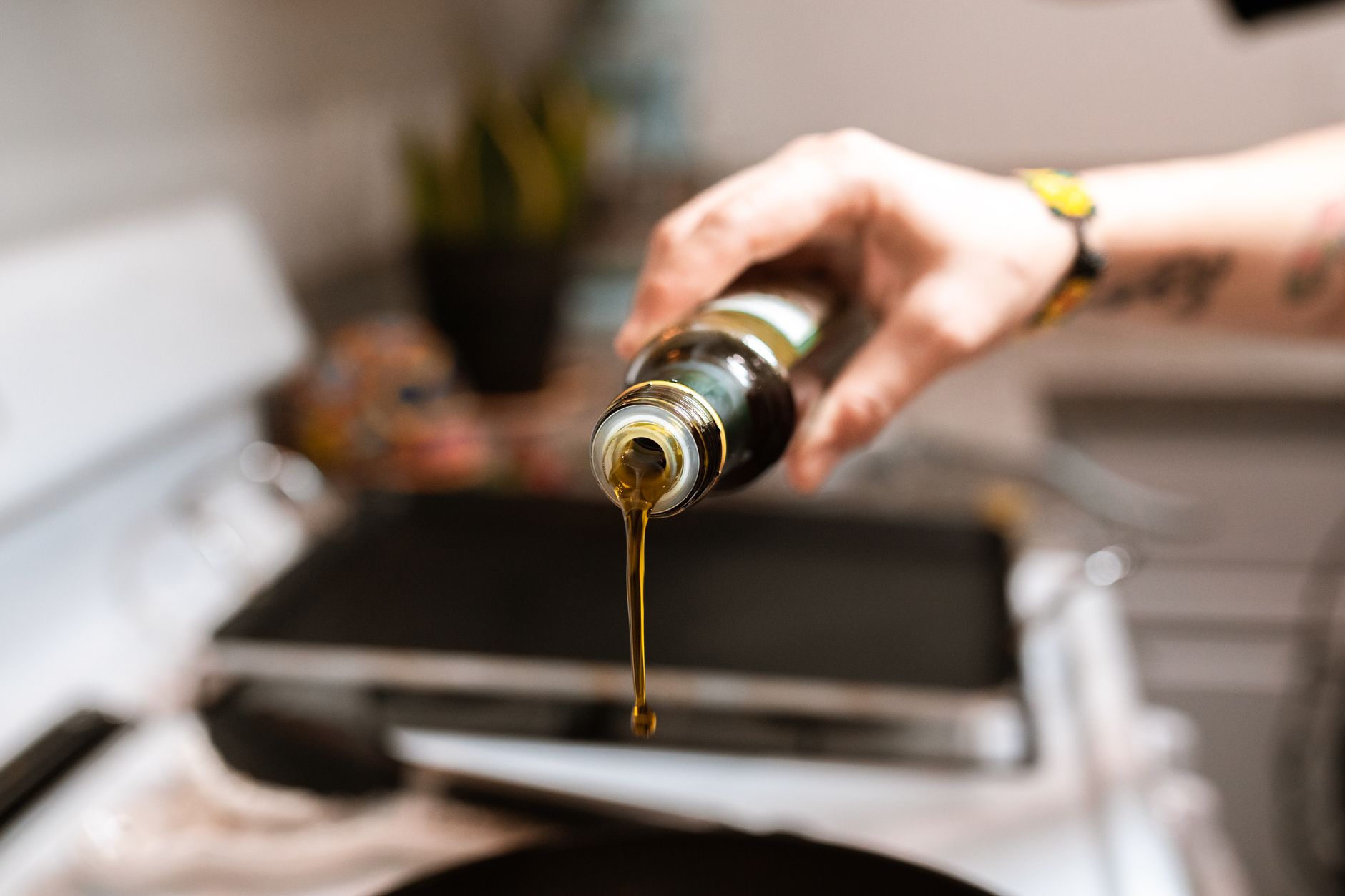
Cooking oil is the classic trap. A “quick glug” into the pan can easily be two or three tablespoons. A tablespoon of oil is roughly 120 calories, so a few glugs can add a few hundred calories before you’ve cooked a thing. For oils, dressings and syrups, it’s genuinely worth measuring with a spoon for a week or two until your eye calibrates.
Nut butters, cheese and granola
These are dense, moreish, and easy to over-serve. A thumb of peanut butter looks tiny next to what most people actually spread. When in doubt, assume you’ve had a little more than it looks.
“Some” is not a portion
Grazing straight from the bag or picking off a shared platter is where tracking falls apart. Put your portion on a plate or in a bowl first. You can’t estimate what you never actually looked at.
Calibrate once, coast after
Here’s the shortcut that ties it together. Spend one week weighing a handful of your regular foods, then look at how that amount sits in your hand or on your plate. Fifty grams of oats. A cooked chicken breast. A tablespoon of olive oil. After that, you’ll have those images in memory and can estimate the same foods for a good while without touching the scale.
Photo-based tracking can make this even faster. Snapping a picture of your plate gives you a rough portion estimate and a record you can adjust quickly, which is often more sustainable than weighing every ingredient — though be aware photo estimates are approximate too. The aim is a system you’ll still be using next year, not a perfect spreadsheet you abandon by Friday.
This article is for general information and isn’t medical advice. If you have a health condition or specific dietary needs, check with a GP or registered dietitian.
Sources
- Food portion sizes and healthy eating — NHS
- Healthy Eating Plate — Harvard T.H. Chan School of Public Health
Track calories the calm way.
AI photo scanning, clean calorie and macro rings, and gentle habits that actually last.